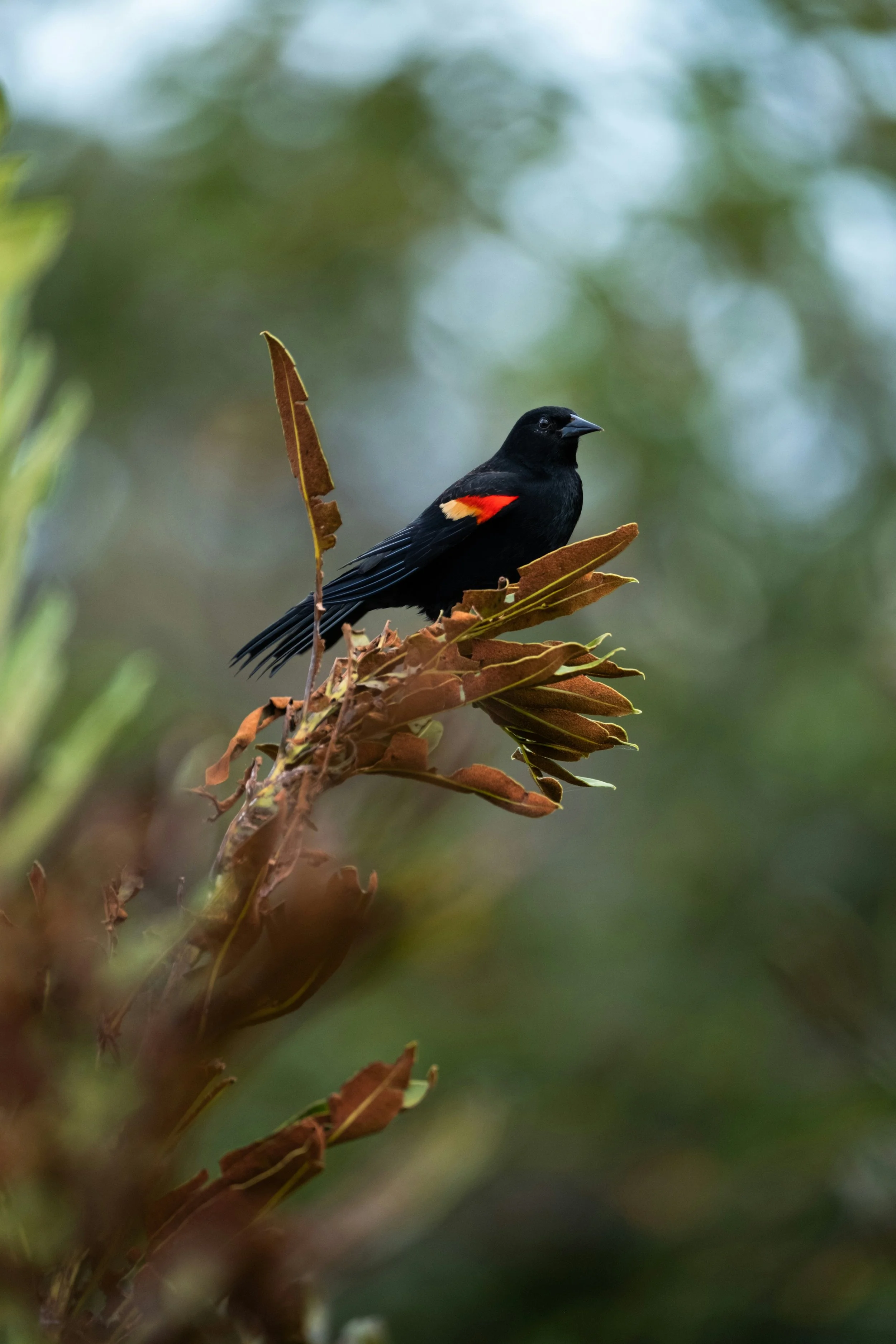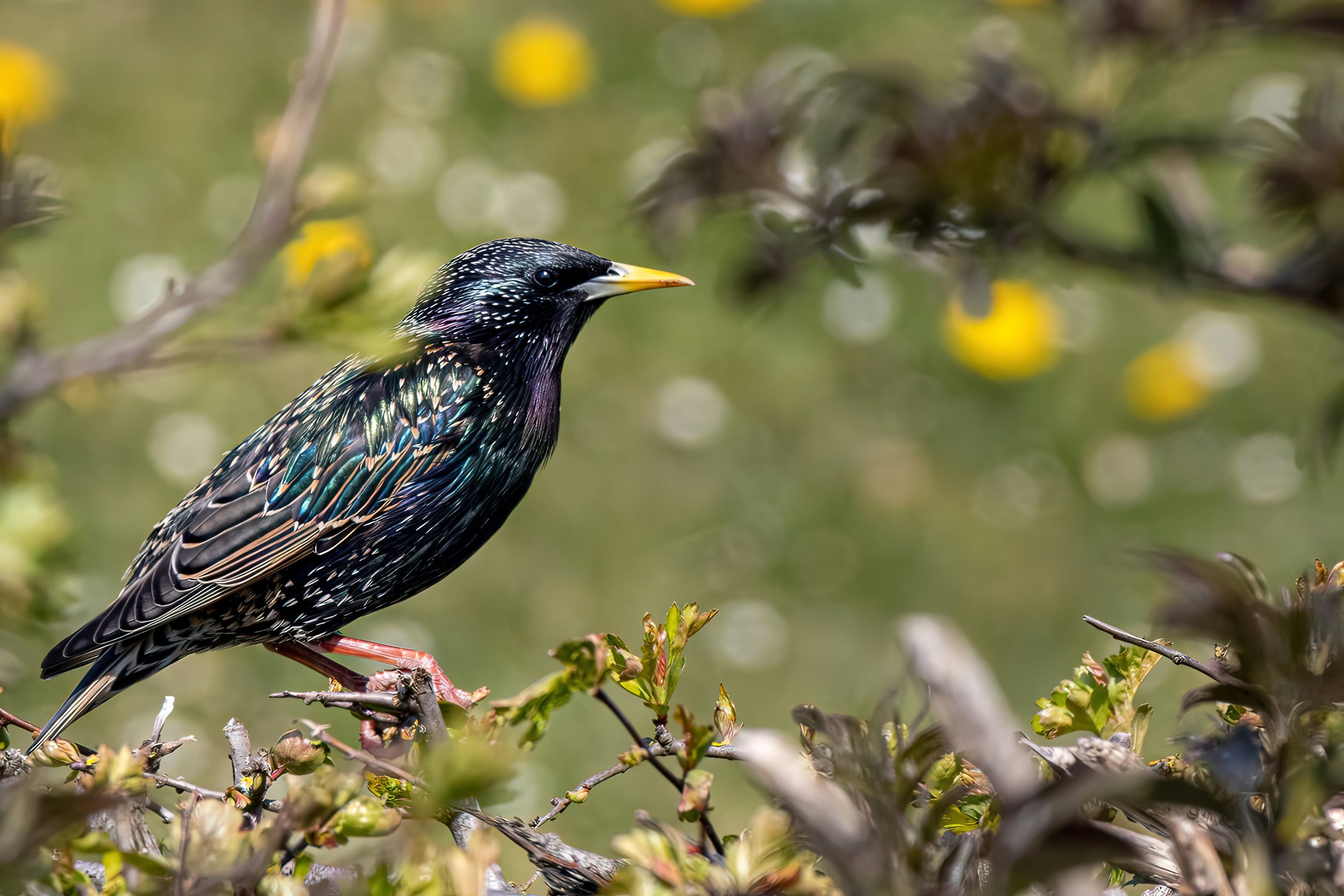
Blackbirds and starlings may look similar at a glance, but they belong to different bird families. Blackbirds—including grackles, cowbirds, meadowlarks, and orioles—belong to Icteridae, while starlings belong to Sturnidae. Both groups include highly social, adaptable birds known for their bold personalities, varied vocalizations, and sometimes spectacular gatherings.
SOCIAL BUTTERFLIES
COMMON STARLINGS & BLACKBIRDS
From shimmering grackles and colorful orioles to enormous swirling flocks of starlings, this group is far more diverse than the name “blackbird” might suggest.
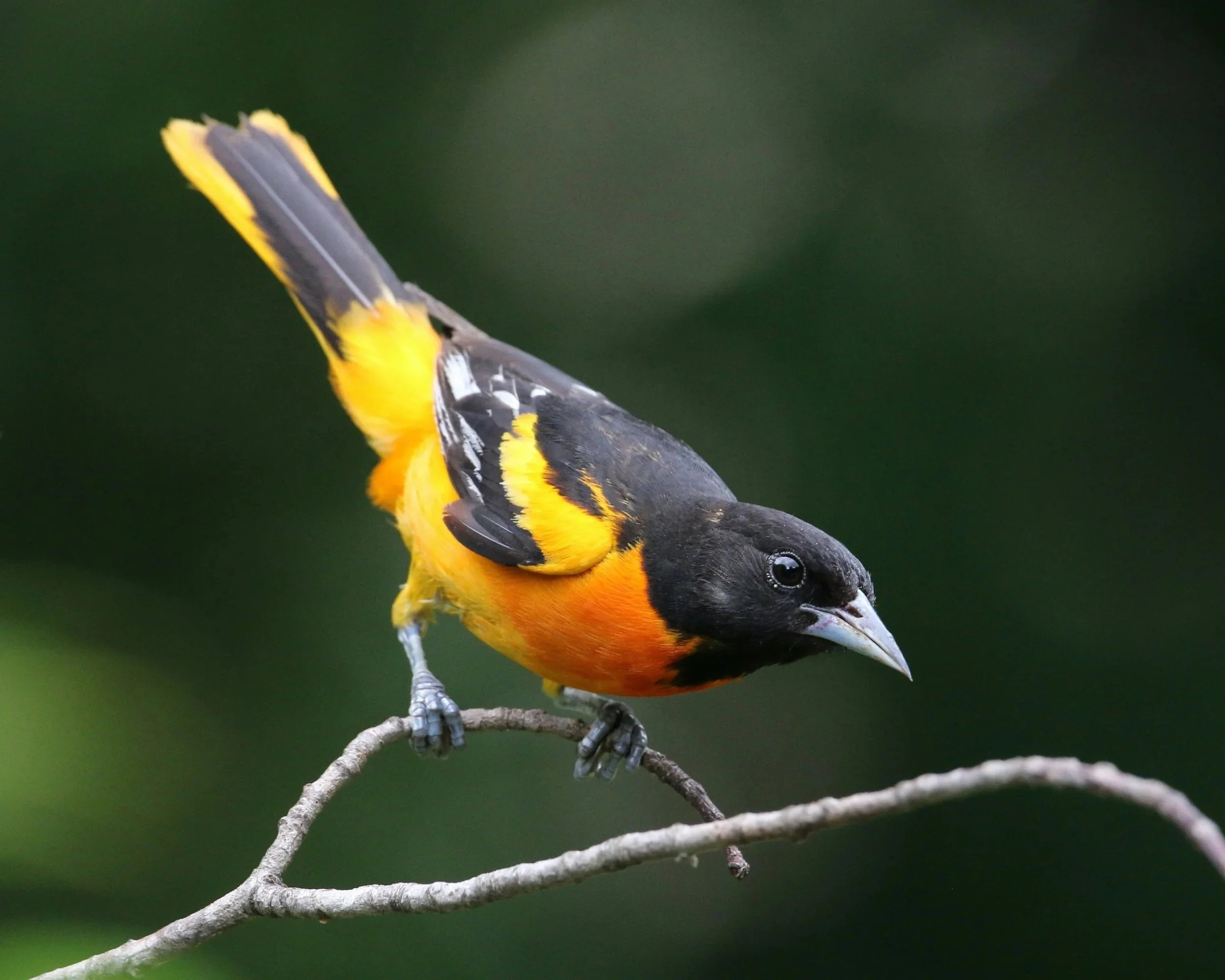
BALTIMORE ORIOLE
(Icterus galbula)
A brilliant orange-and-black songbird often found high in leafy trees. Orioles feed on insects, fruit, and nectar and build distinctive hanging nests.
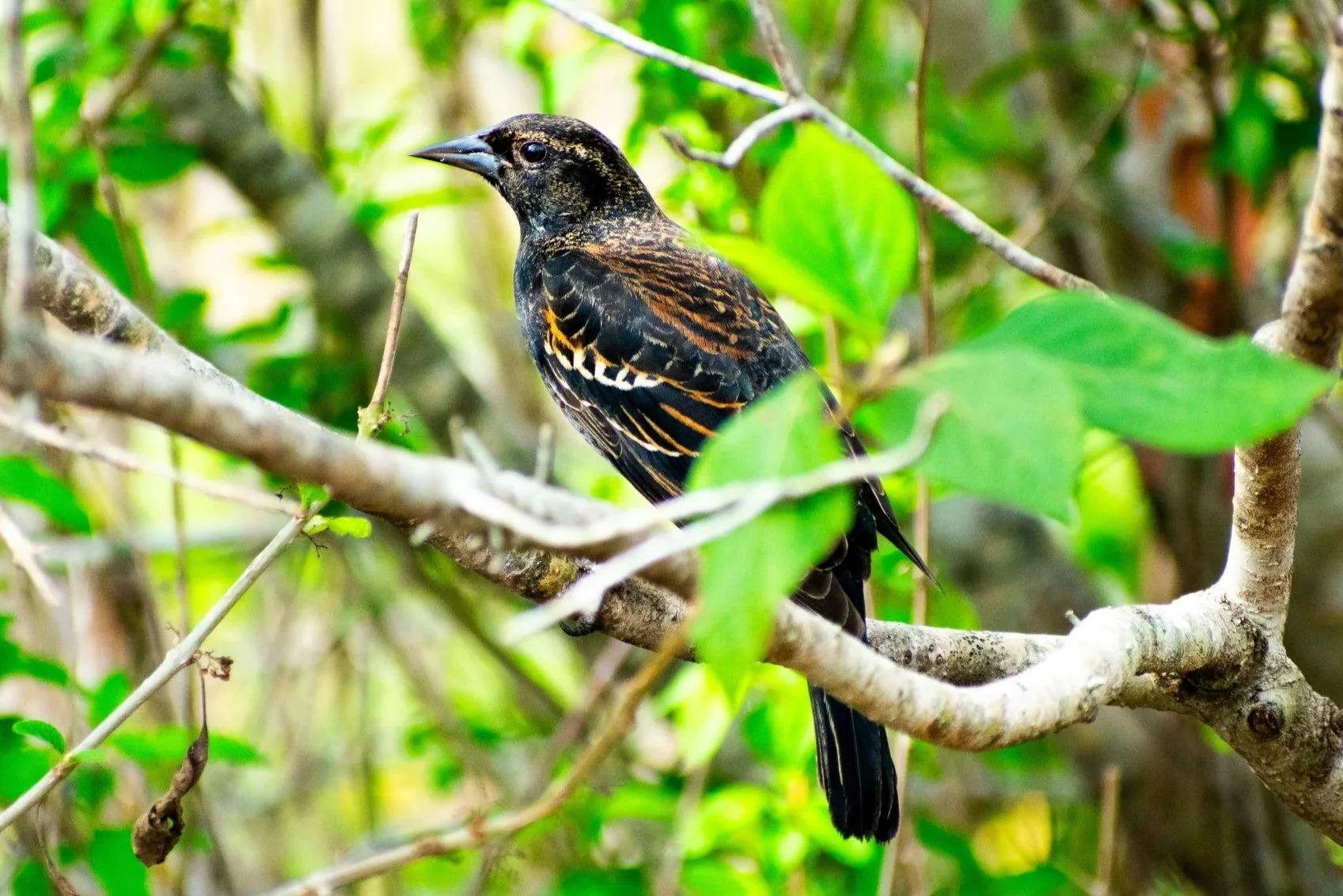
RUSTY BLACKBIRD
(Euphagus carolinus)
A relatively uncommon blackbird associated with wooded wetlands. Once abundant, its population has undergone one of the steepest declines among North American songbirds.
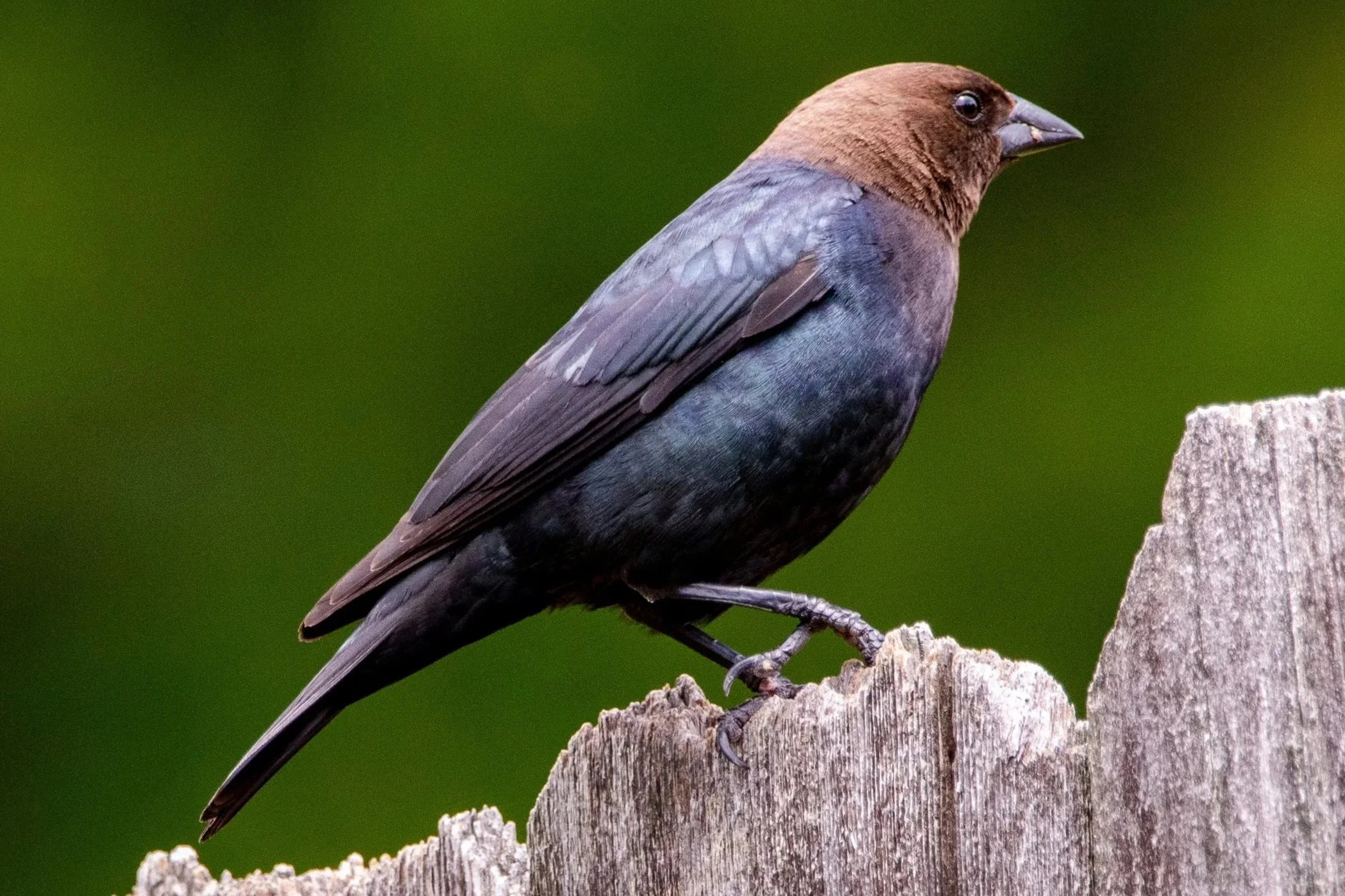
BROWN-HEADED COWBIRD
(Molothrus ater)
A stocky blackbird known for laying its eggs in other birds’ nests. This unusual reproductive strategy is called brood parasitism.
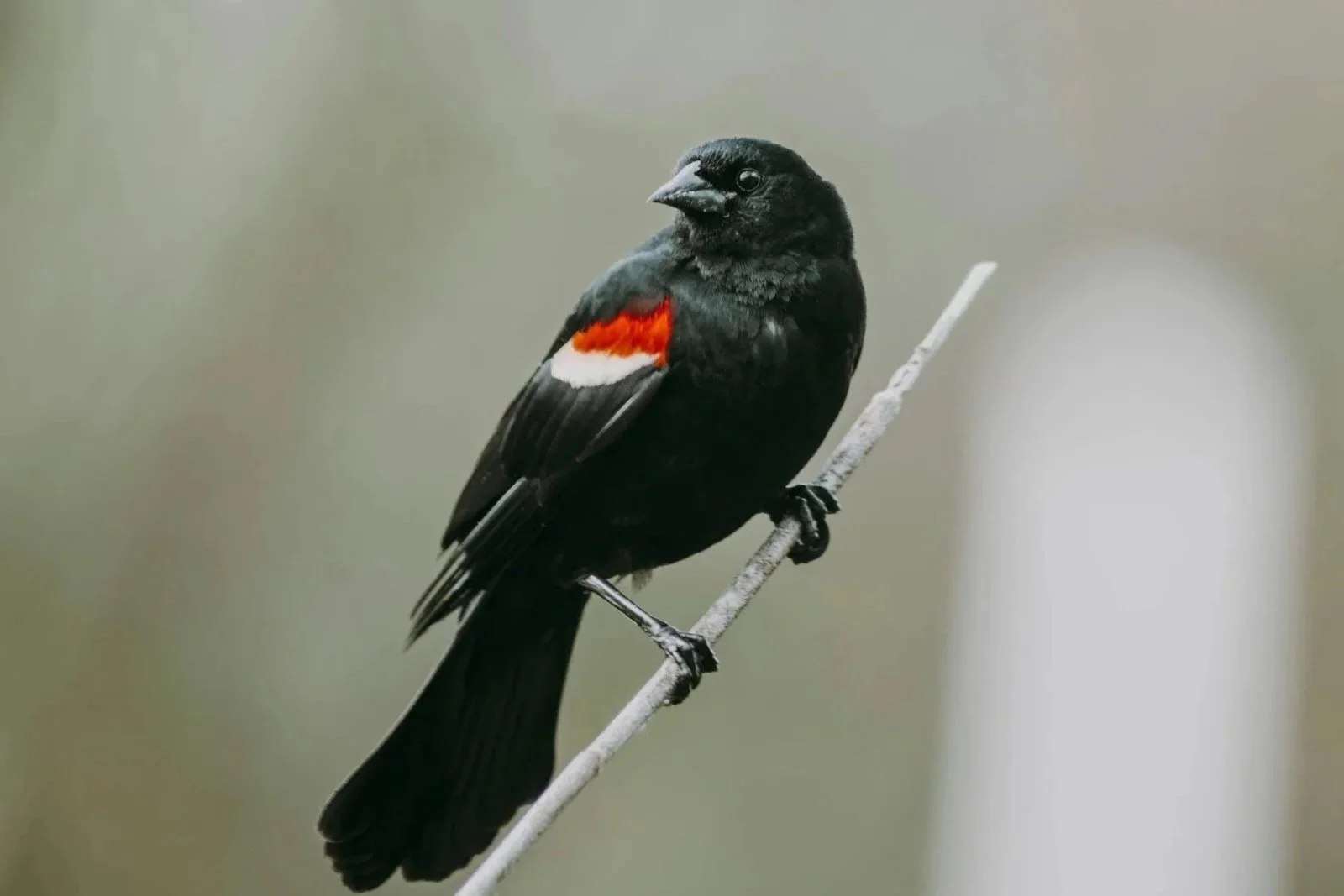
RED-WINGED BLACKBIRD
(Agelaius phoeniceus)
A familiar wetland bird whose males display bright red-and-yellow shoulder patches. Their distinctive calls are a classic sound of marshes and fields.
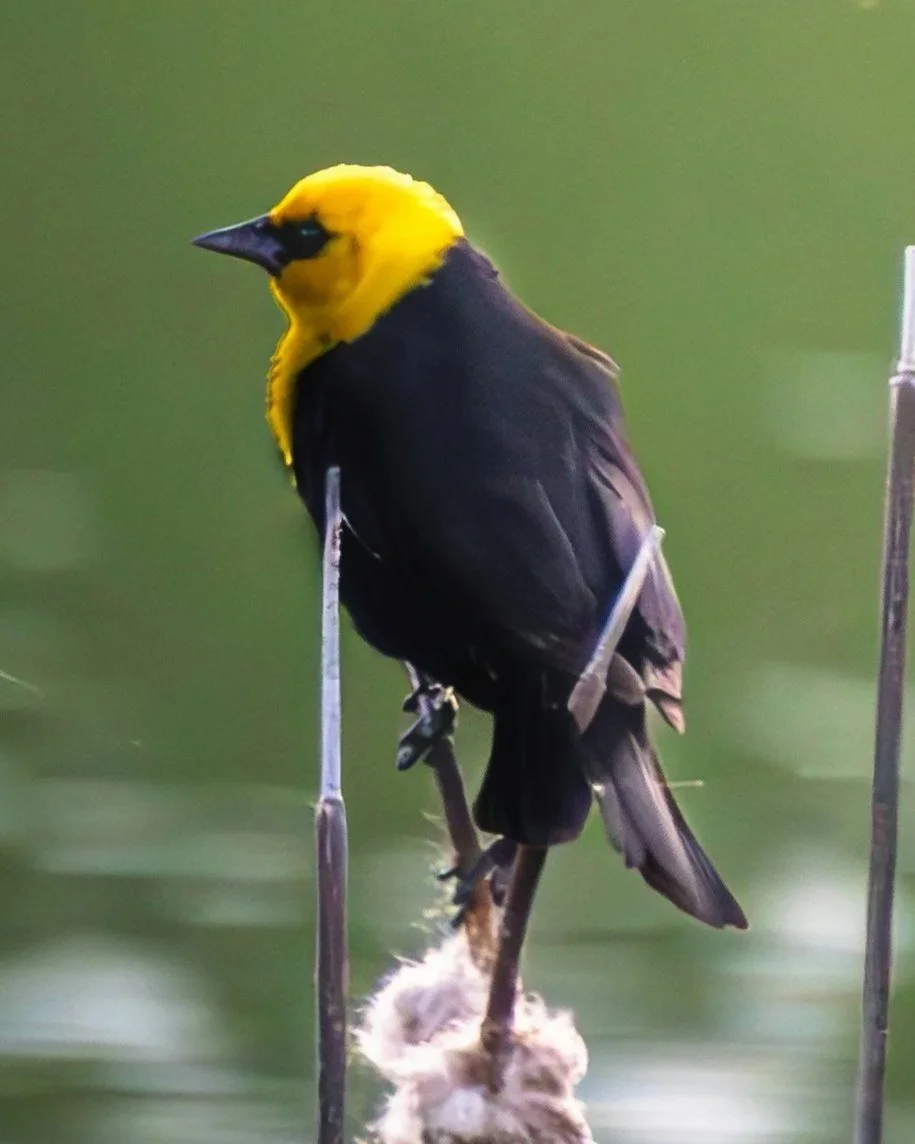
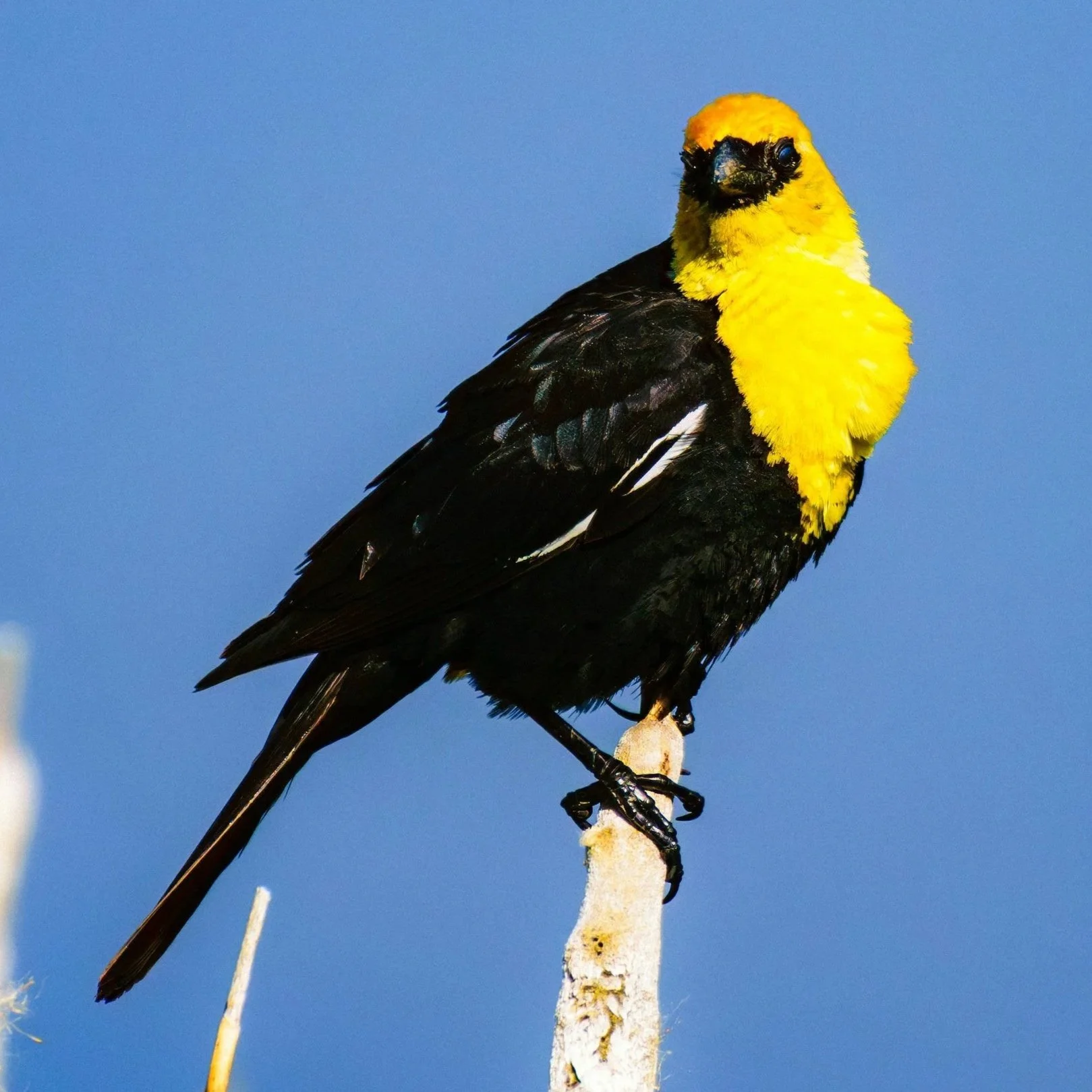
YELLOW-HEADED BLACKBIRD
(Xanthocephalus xanthocephalus)
An unmistakable western blackbird with a brilliant yellow head and chest. It breeds primarily in wetlands, often nesting among cattails and reeds.
A small oriole whose adult males are deep chestnut and black. They forage for insects, fruit, and nectar among trees and shrubs.
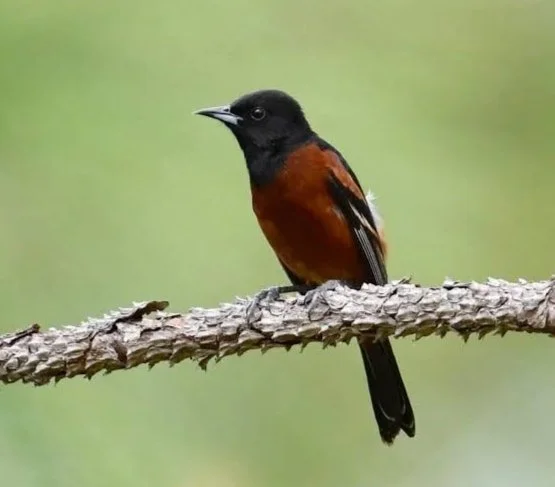
ORCHARD ORIOLE
(Icterus spurius)
A large, long-tailed blackbird with glossy, iridescent plumage. Intelligent and adaptable, grackles thrive in a variety of habitats.
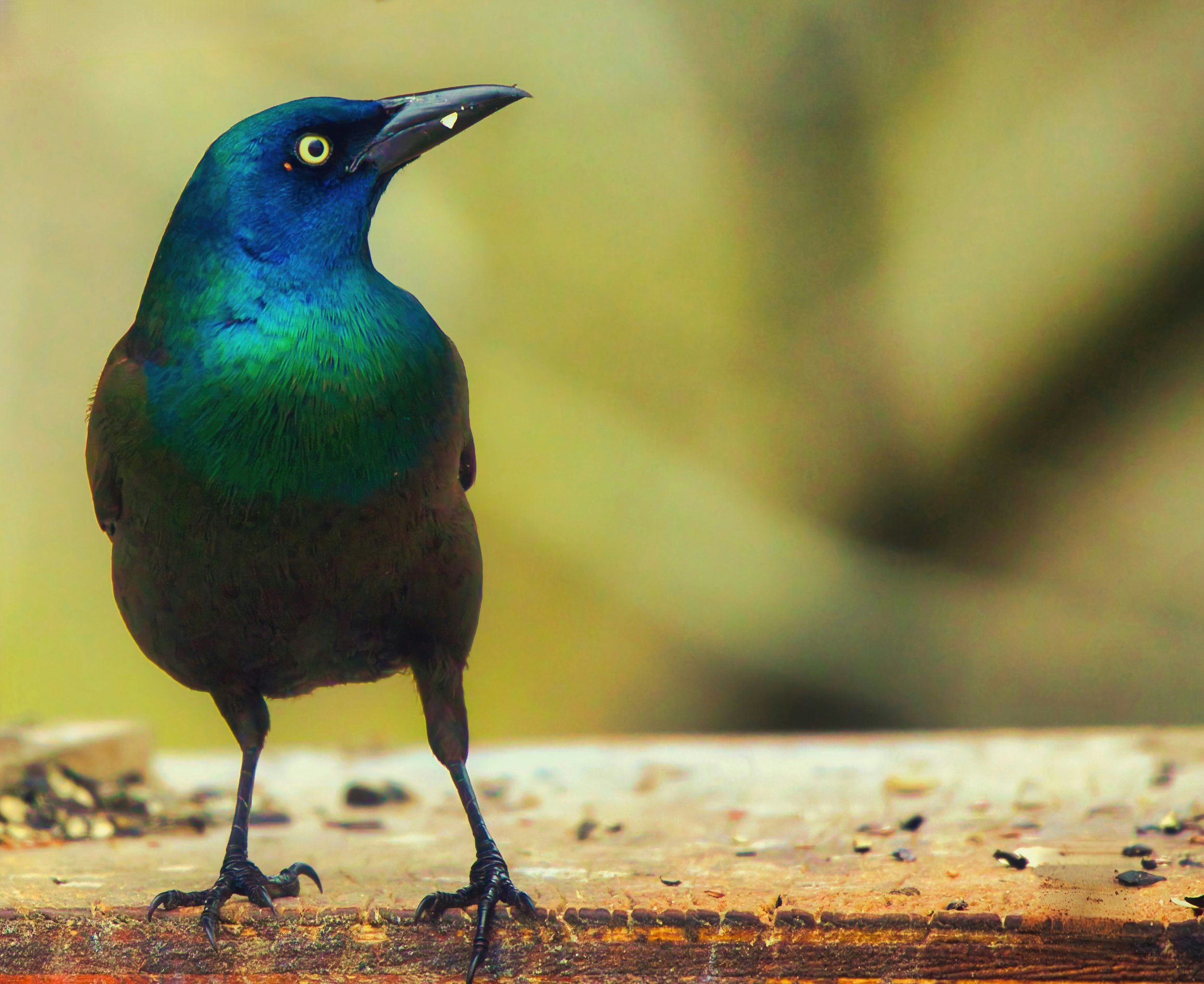
COMMON GRACKLE
(Quiscalus quiscula)
A highly adaptable introduced species with glossy, speckled plumage. Starlings are excellent vocal mimics and often gather in enormous flocks.
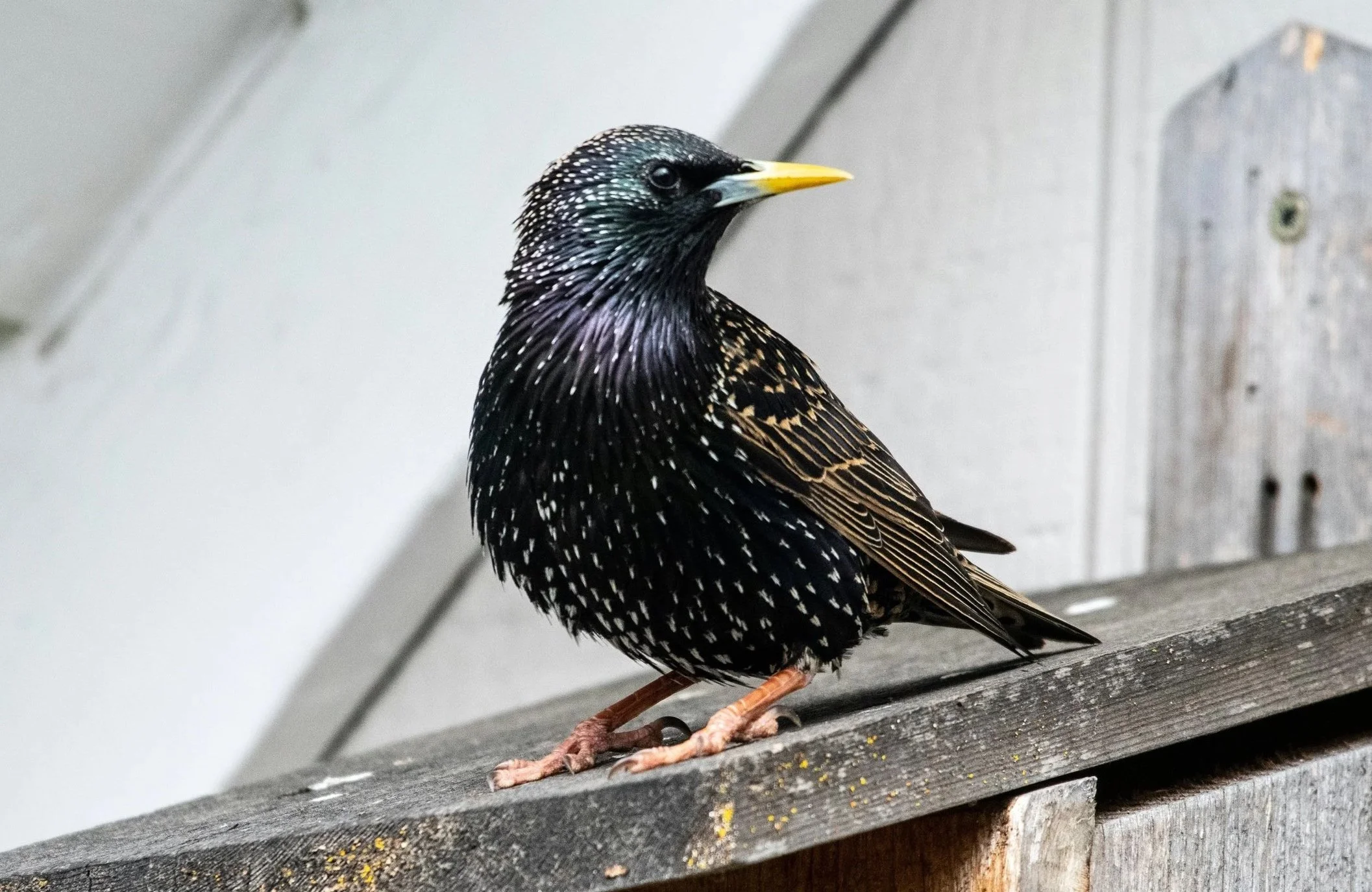
EUROPEAN STARLING
(Sturnus vulgaris)
FACT OR FICTION?
-
FICTION. The blackbird family includes brightly colored orioles, meadowlarks, and other species that look nothing like the name suggests.
-
FACT. European Starlings are talented mimics and can copy the calls of other birds as well as a surprising variety of environmental sounds.
-
FICTION. Brown-headed Cowbirds naturally reproduce through brood parasitism, laying eggs in the nests of other species. It isn't laziness or bad parenting—it is an evolved reproductive strategy.
-
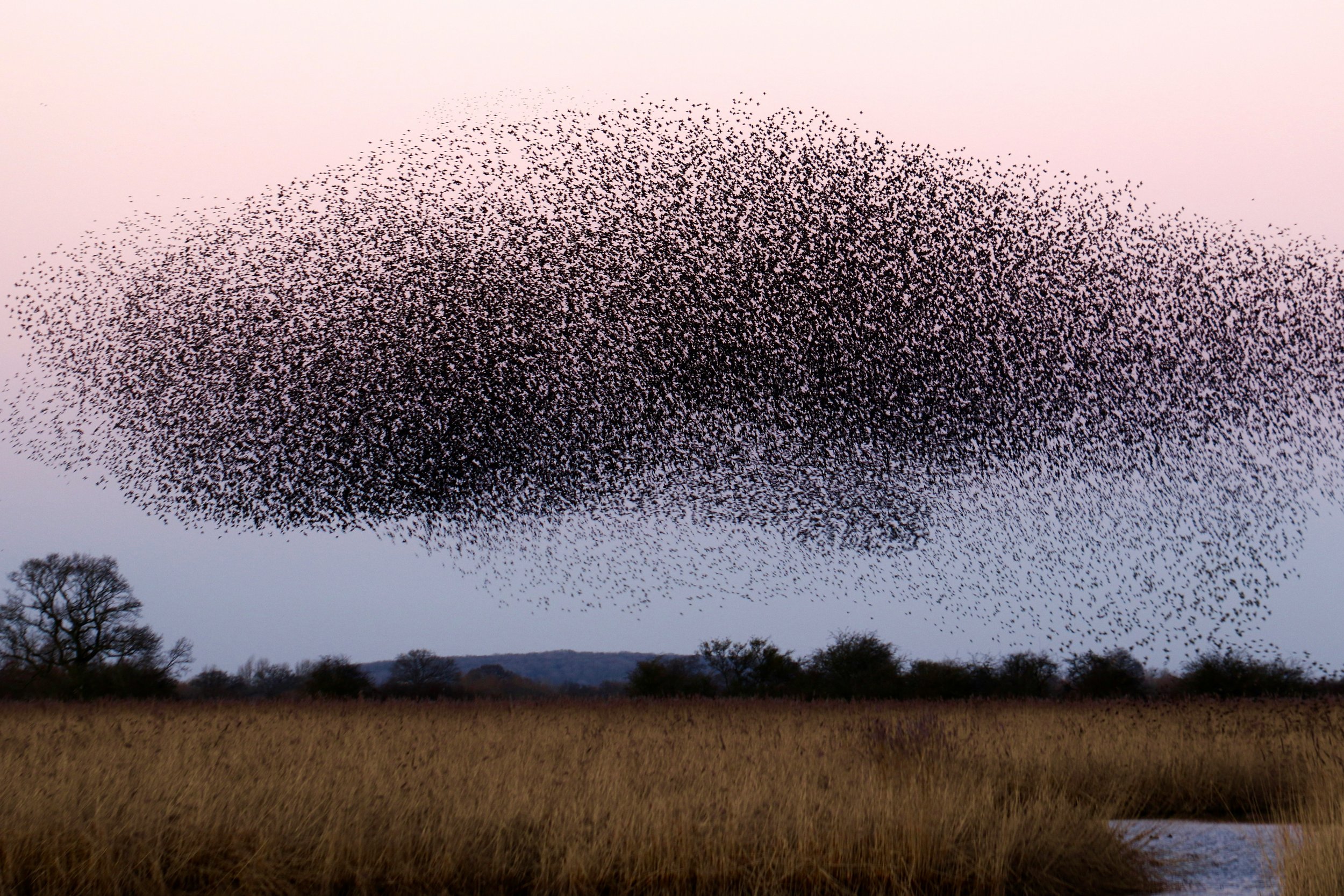
FACT. A coordinated flock of starlings moving through the sky is called a murmuration. Thousands of birds can move together in remarkably fluid patterns.
-
FICTION. Despite their dark plumage and sometimes similar behavior, grackles are blackbirds in the family Icteridae. Crows belong to Corvidae.
-
FACT: Many species consume large numbers of insects and other invertebrates, particularly while raising their young.
WHY BLACKBIRDS & STARLINGS MATTER.
These adaptable birds play roles as insect predators, seed consumers, scavengers, and prey. Some species live exceptionally well alongside people, while others are declining and depend on increasingly threatened habitats. Understanding the differences among them helps us look beyond the familiar “black bird” and appreciate a surprisingly diverse group of songbirds.