Woodpeckers are built for life on trees. Strong feet, stiff tail feathers, specialized bills, and remarkably long tongues help them climb, excavate, and uncover food hidden beneath bark. Their familiar tapping isn't always about finding a meal—woodpeckers also excavate nest cavities and drum on resonant surfaces to communicate and establish territory.
TREE TAPPERS
COMMON WOODPECKERS
Woodpeckers belong to the family Picidae, which also includes flickers and sapsuckers. More than 200 species occur worldwide, with a wide variety found throughout North America.
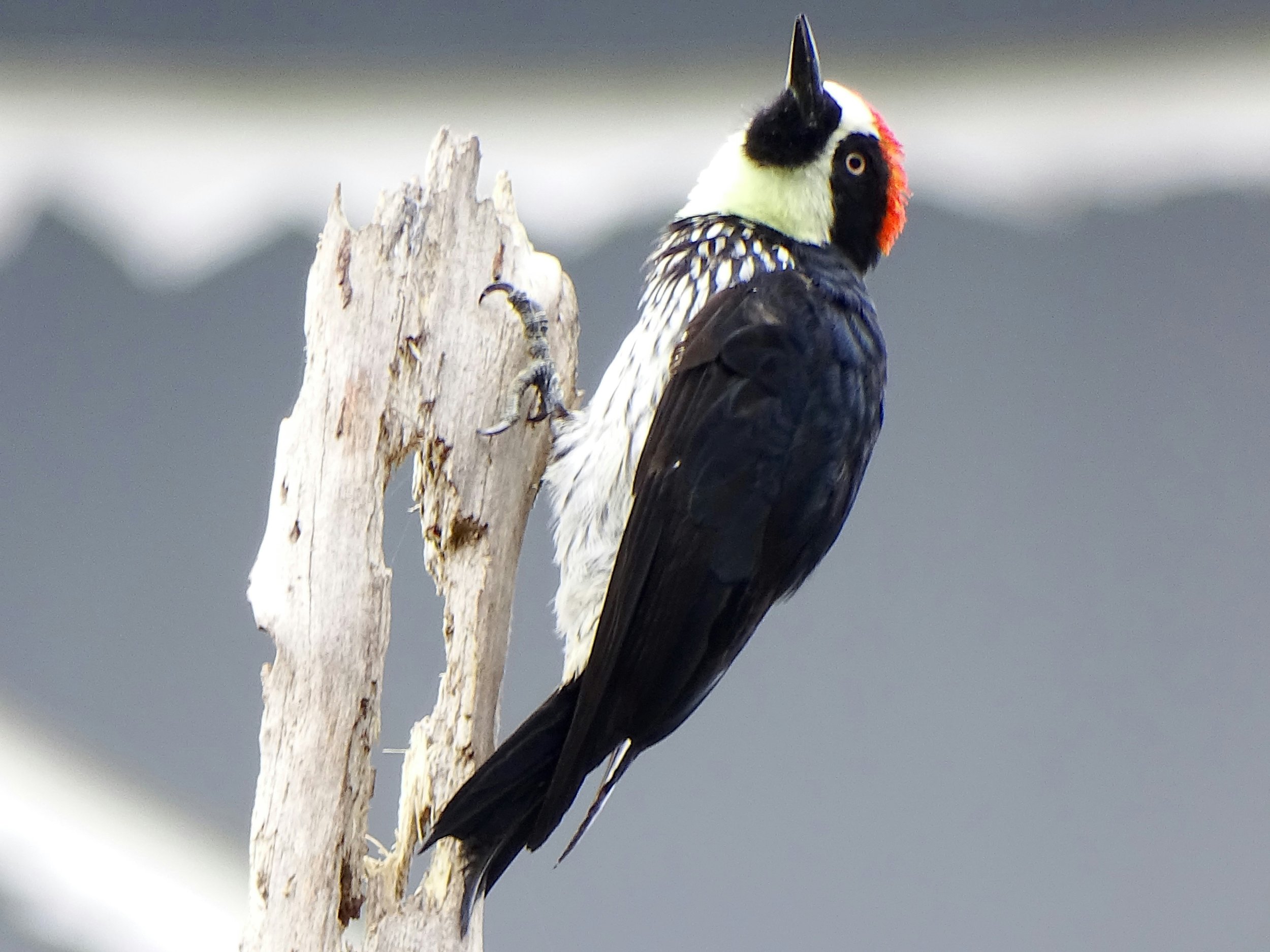
ACORN WOODPECKER
(Melanerpes formicivorus)
A highly social western woodpecker famous for storing thousands of acorns in communal “granary” trees.
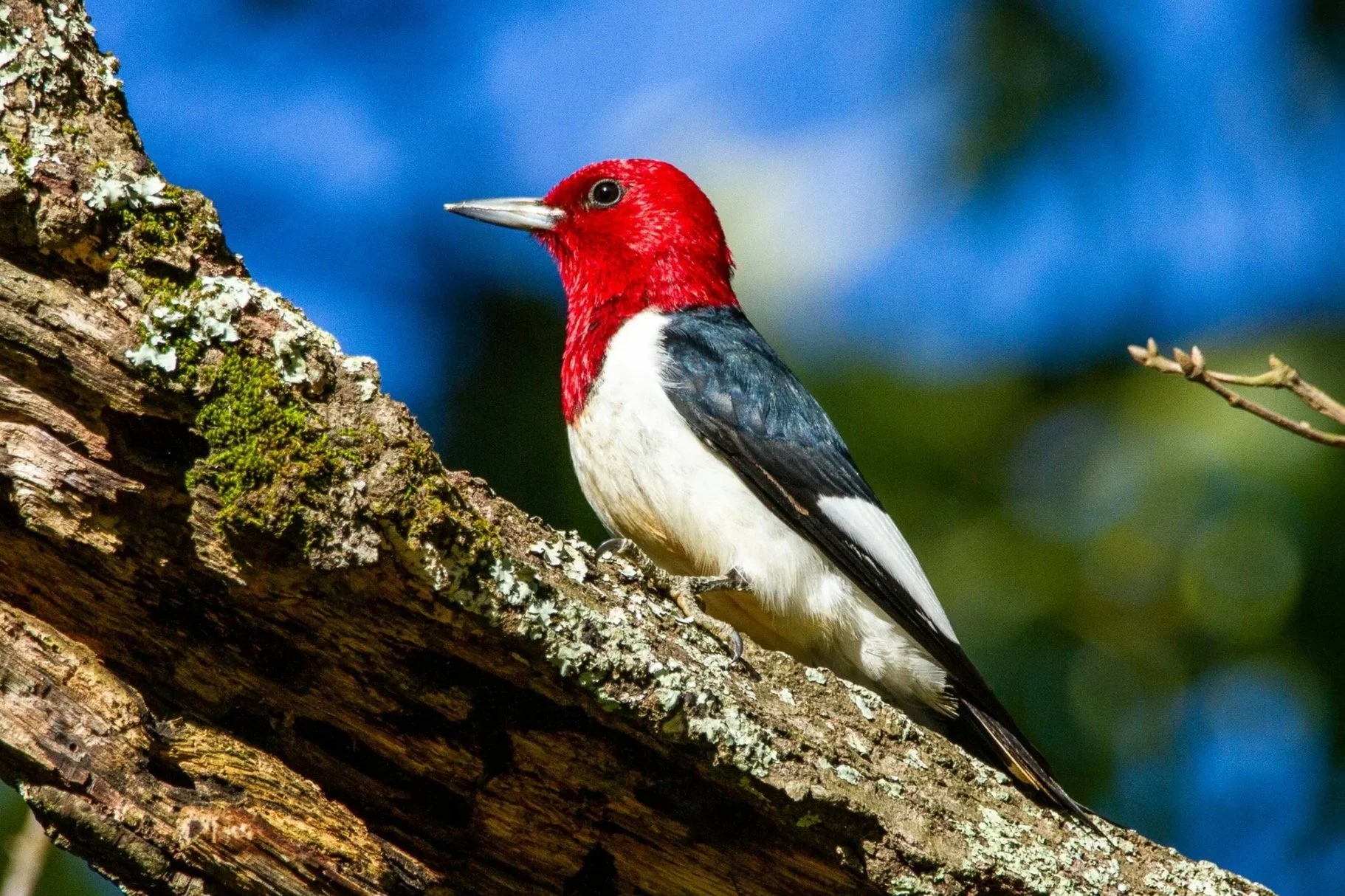
RED-HEADED WOODPECKER
(Melanerpes erythrocephalus)
An unmistakable woodpecker with a completely red head and bold black-and-white body. It catches insects and stores nuts and other foods for later.
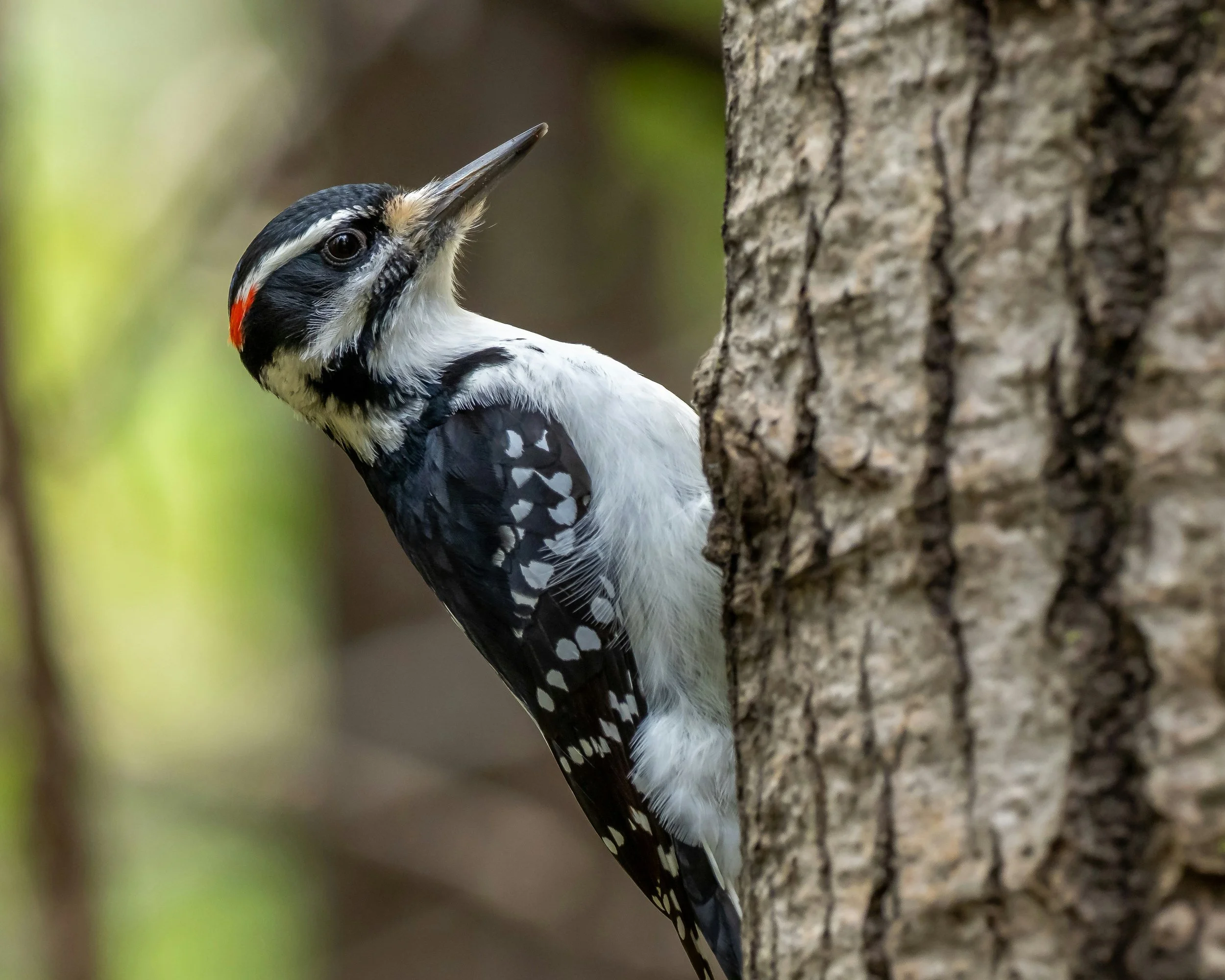
DOWNY WOODPECKER
(Dryobates pubescens)
North America's smallest woodpecker and a frequent backyard visitor. Its small bill helps distinguish it from the similar Hairy Woodpecker.
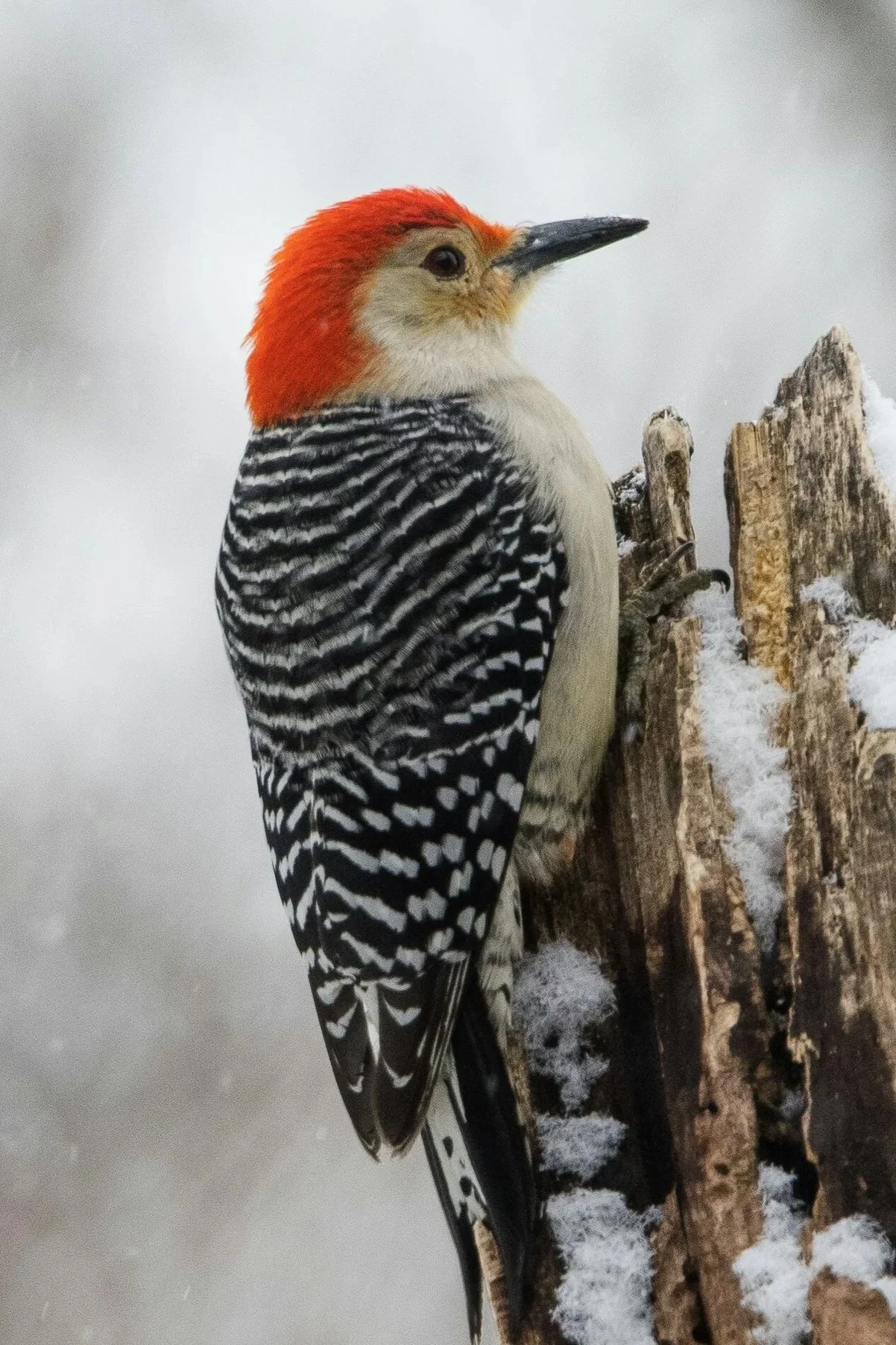
RED-BELLIED WOODPECKER
(Melanerpes carolinus)
A common eastern woodpecker with a barred black-and-white back. Despite its name, the reddish wash on its belly can be difficult to see.
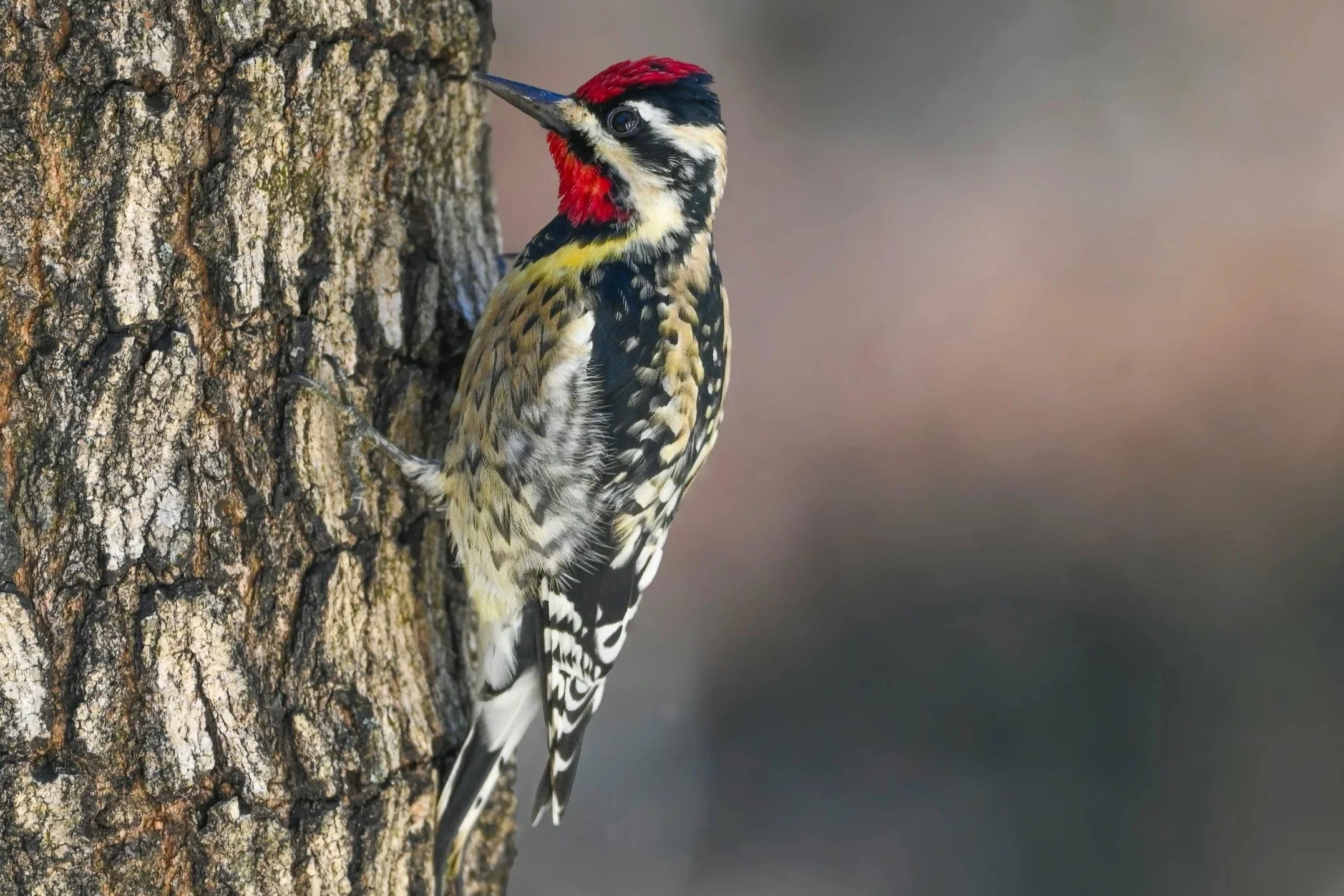
YELLOW-BELLIED SAPSUCKER
(Sphyrapicus varius)
A migratory woodpecker that drills neat rows of sap wells in trees. The flowing sap also provides food for insects and other wildlife.
A spectacular crow-sized woodpecker with a bright red crest. Its powerful excavations create large cavities that benefit many other animals.
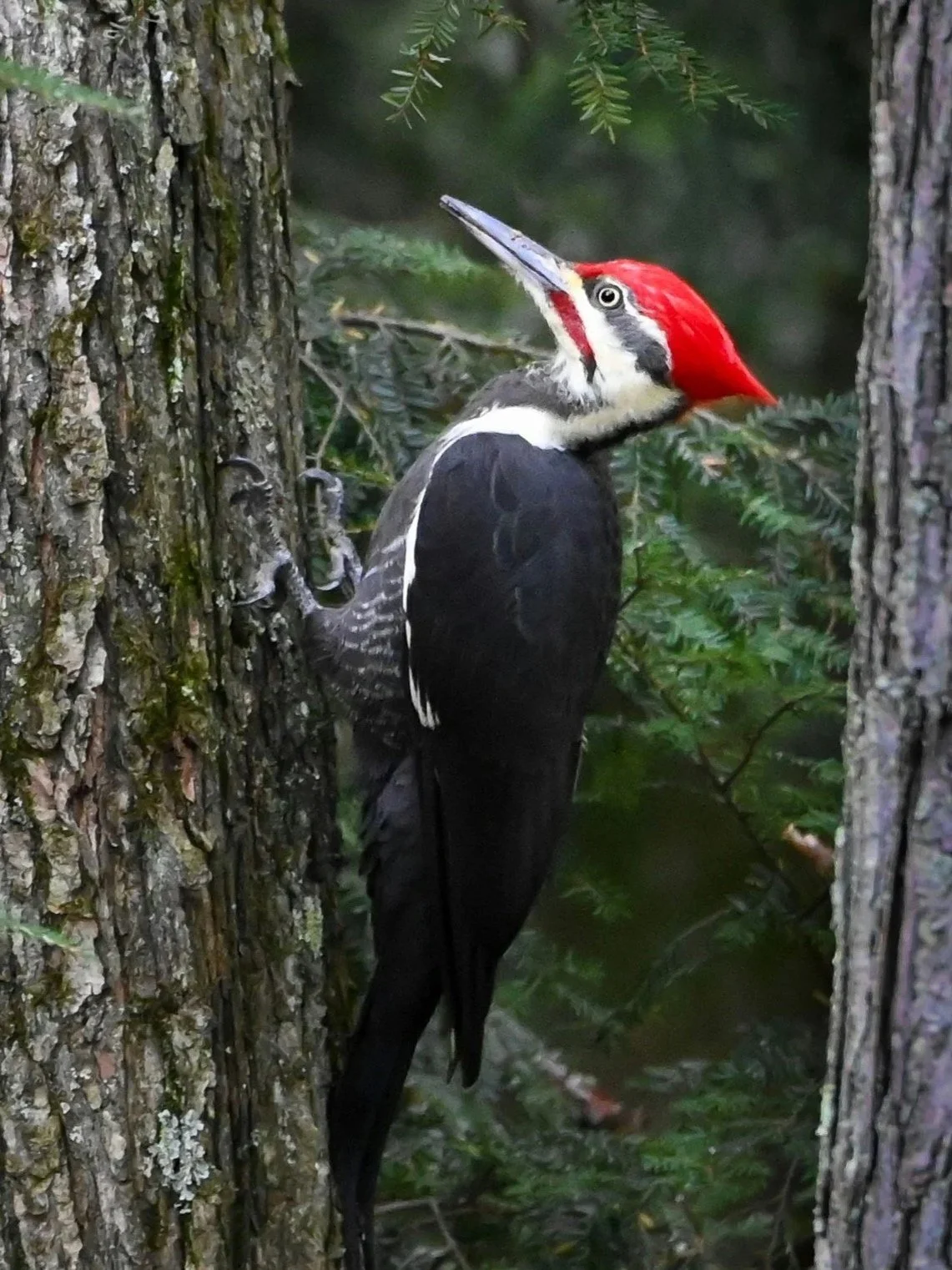
PILEATED WOODPECKER
(Dryocopus pileatus)
A black-and-white woodpecker resembling a larger Downy. It uses its substantial bill to uncover insects beneath bark and wood.
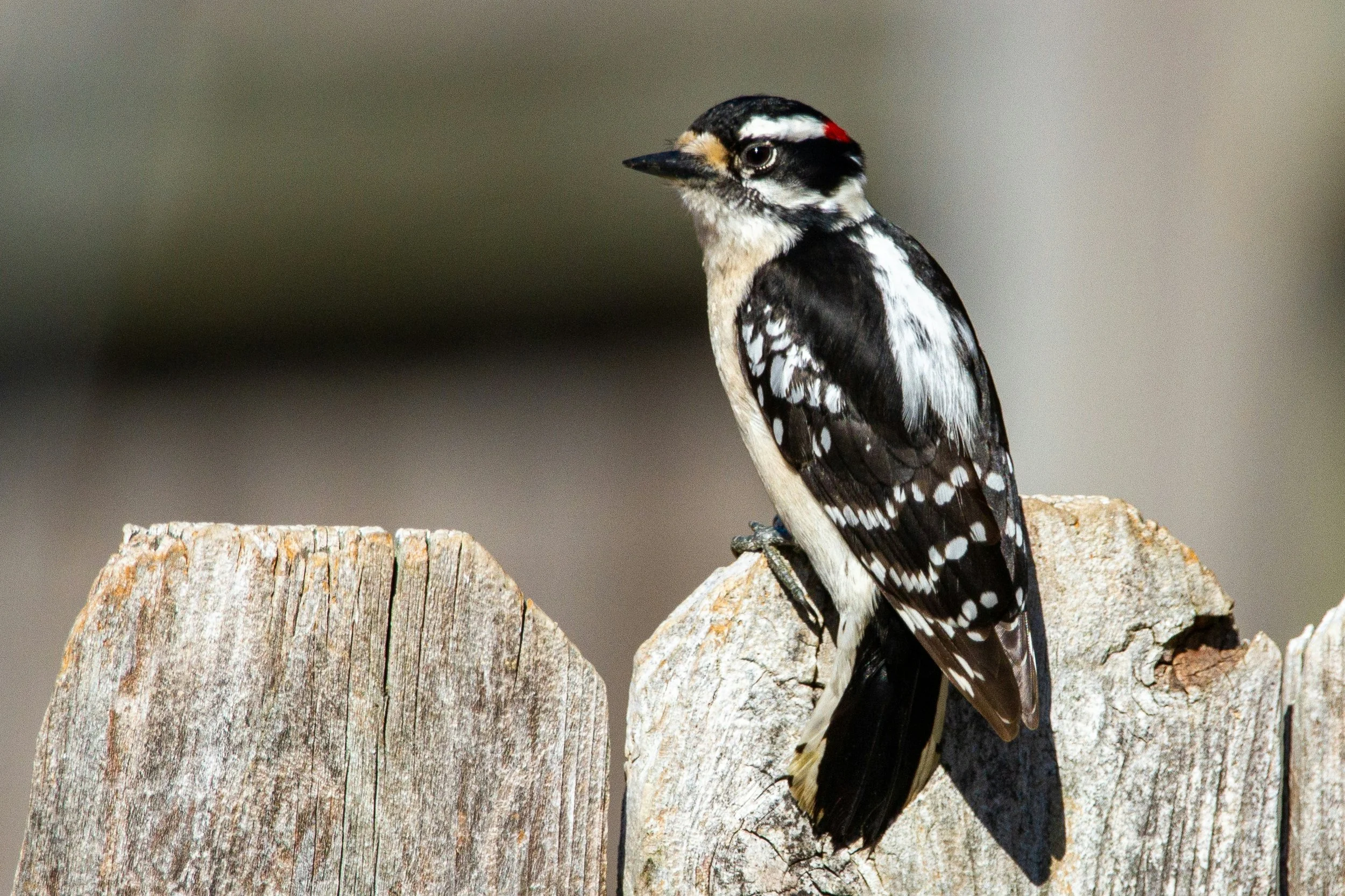
HAIRY WOODPECKER
(Leuconotopicus villosus)
A large, spotted woodpecker that frequently feeds on the ground. Ants make up a significant portion of its diet.
NORTHERN FLICKER
(Colaptes auratus)

FACT OR FICTION?
-
FACT. Their anatomy is highly adapted to repeated pecking, although the old idea that their skull works simply like a shock-absorbing helmet greatly oversimplifies how their bodies manage these forces..
-
FICTION. They also excavate nest and roost cavities and drum to communicate. A particularly loud gutter, chimney cap, or metal flashing may even make an appealing drum.
-
FACT. Many woodpeckers have extremely long, specialized tongues that help them reach insects or other foods deep inside crevices and holes.
-
FACT. Unlike the stereotypical tree-climbing woodpecker, flickers frequently forage on the ground for ants and other insects.
-
FICTION, USUALLY. Healthy trees can generally tolerate normal sapsucker feeding. Their sap wells may also provide a valuable food source for hummingbirds, insects, and other animals.
-
FICTION: Abandoned cavities provide nesting and shelter sites for many animals that can't excavate their own, including other birds and small mammals.
WHY WOODPECKERS MATTER.
Woodpeckers help control insects and create nesting and shelter sites used by many other animals. Their excavations can make them important ecosystem engineers, creating resources that remain valuable long after the woodpecker moves on. Protecting mature trees, dead snags, and healthy woodland habitat helps woodpeckers—and an entire community of wildlife that benefits from their work.